
LUNG TRANSPLANTATION
NARROWING PRECISION
EXPANDING THE SCOPE
Routine Doesn’t Equal Reliable
TURNING UP THE PRESSURE
INCONSISTENT GUIDANCE
-
Procurement guidelines have recommended holding lungs at a static inflation pressure of 12-15 cm H2O to avoid over- or under-distension.2
-
Other surgical protocols have cited that lungs should be inflated to pressures between 15-20 cm H2O before stapling the trachea.3
-
In practice, inflation is sometimes performed using total lung capacity as guidance with the trachea being clamped while the lungs are in a partially inflated state as a means of compensating for future pressure change due to air travel.4,5
-
In addition, modern air transport imposes cabin pressure variations where lungs inflated to full capacity risk barotrauma during flights, highlighted more in depth below.
THESE UNCERTAINTIES HAVE LED TO PRECAUTIONARY MEASURES:
CLINICAL CONTEXT
CASE EXAMPLE
In a clinical case example, airway pressure in donor lungs was recorded at a starting pressure of 9 cm H2O, below the guideline’s minimum threshold and potentially at a higher risk for atelectasis due to pressure changes during preservation. This highlights not only the challenge of achieving and maintaining the recommended inflation state, but also the variability and subjectivity employed while packaging donor lungs.6

Donor lungs were placed into the BAROguard System at 9.3 cm H2O. Within 1 minute, the system adjusted the pressure of the lungs to be in the recommended range of 12-15 cm H2O.
FACTORING IN FLIGHTS
ACHIEVING NEW HEIGHTS
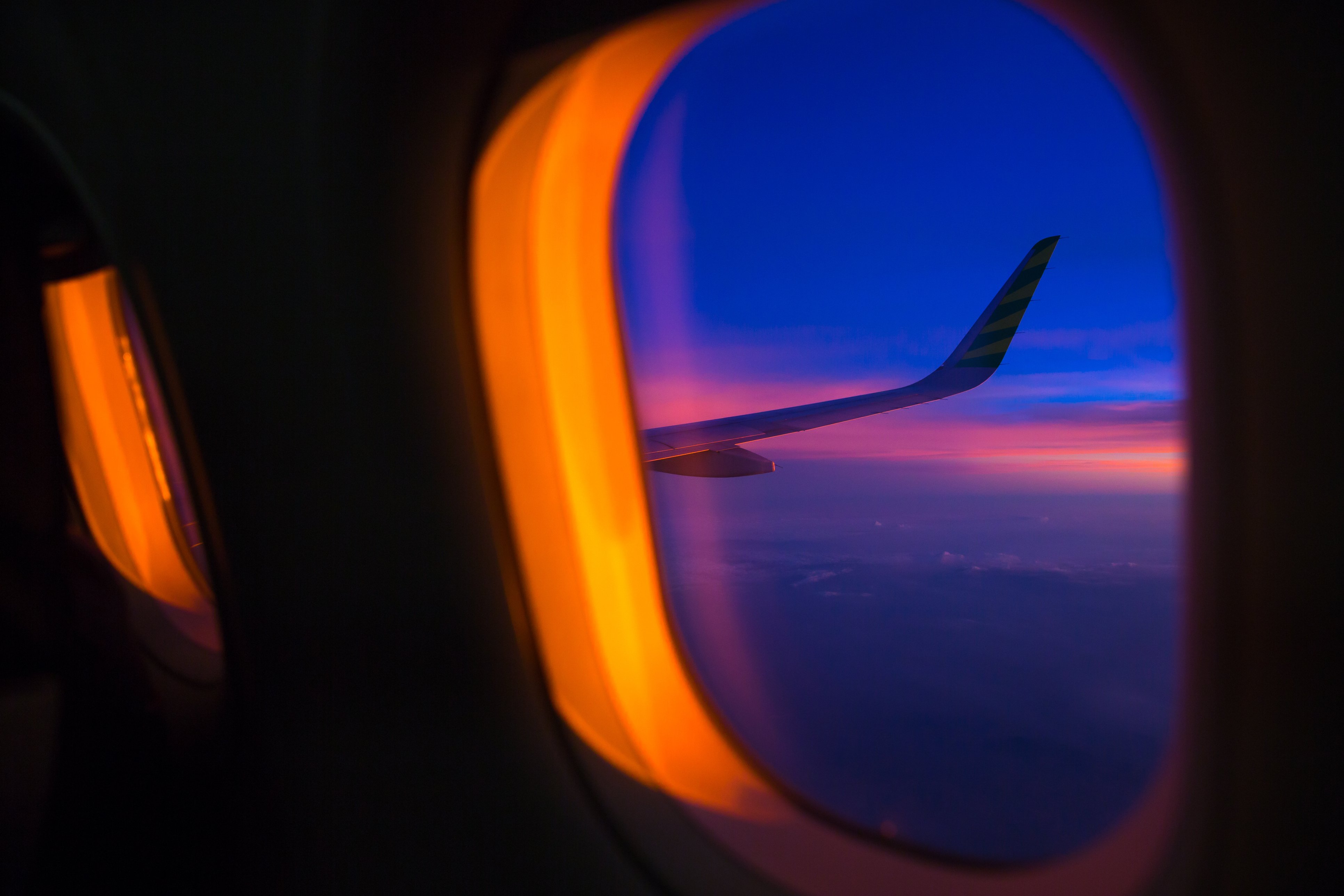
For this reason, both commercial and private aircraft cabins are not pressurized to sea level conditions.
Instead, cabins are pressurized to a lower atmospheric pressure, characteristic of higher elevation. Private aircrafts offer cabin pressurization roughly equivalent to altitudes between 3,000 and 5,000 ft, while direct measurements aboard Boeing 747-400 flights showed average cabin pressure of 863 cm H2O, corresponding to an altitude of 5,000-8,000 ft.8,10

PRESSURE TRANSPARENCY
BAROMETRIC PRESSURE DATA COLLECTION
Ambient pressure data from nearly 100 clinical lung transplant cases has been collected using a mobile device’s onboard barometric sensor and the Paragonix digital application.
Donor lungs experienced an average ambient pressure decrease of 198 cm H2O as a result of increasing altitudes during air transport. Ambient pressure remained reduced for an average duration of 4.7 hours before returning to near sea-level conditions, accounting for different flight lengths. The average minimum ambient pressure experienced by lungs during transport was 838 cm H2O.
Across all cases, the lowest recorded ambient pressure was 767 cm H2O, consistent with the minimum cabin pressurization required for commercial aircraft (8,000 ft). The highest recorded ambient pressure was 1052 cm H2O.
Despite these fluctuations in ambient pressure,
BAROguard controlled the internal airway pressure of all donor lungs
within consensus range to an average of 14 ± 0.47 cm H2O for the duration of preservation.
ALL ENVIRONMENTAL FACTORS ARE CRITICAL.
THE RIGHT COMBINATION.
View References List
- De Perrot et al., Strategies to optimize the use of currently available lung donors. JHLT 2004.
- Copeland et al. Donor heart and lung procurement: A consensus statement. JHLT 2020.\
- Kukreja et al., The 2024 American Association for Thoracic Surgery expert consensus document: Current standards in donor lung procurement and preservation. JHLT 2025.
- Cantu et al., Evaluation and Management of the Potential Lung Donor. Clin Chest Med 2018.
- Krishnan et al., Procurement of lungs from brain-dead donors. Indian J Thorac Cardiovasc Surg 2021.
- Langer, AATS MCS Industry Symposium 2025, Data on file. Delivering Textbook Outcomes in Lung Transplantation. September 5, 2025.
- Greenwald et al., Cabin pressurization characteristics of USAF and commercial transport aircraft. Aeromed Rev., 1967.
- Falcon 10X Aircraft. (6 May, 2021). https://www.dassaultfalcon.com/news/falcon-10x-2/#:~:text=Healthy%20cabin%20features:%20Cabin%20pressurization,for%20an%20even%20temperature%20throughout.
- Private Jet Charter. Gulfstream G650. https://privatejetcharter.com/aircraft/gulfstream-g650/#:~:text=Welcome%20to%20Private%20Jet%20Charter,an%20abundance%20of%20natural%20light.
- Kelly et al., Directly measured cabin pressure conditions during Boeing 747-400 commercial aircraft flights. Respirology 2007.
- Federal Aviation Administration. (2004). Pressurized compartment loads: General Structures Harmonization Working Group (Report No. ARAC TAEIG L-350-04-112). U.S. Department of Transportation. https://www.faa.gov/media/31686
- Geertsema C, et al. Effect of commercial airline travel on oxygen saturation in athletes. Br J Sports Med. 2008 Nov;42(11):877-81.