
LUNG TRANSPLANTATION
THE RIGHT COMBINATION
TAPPING INTO PRECLINICAL RESEARCH
THE MODERN ERA OF LUNG PRESERVATION

However, the physiological characteristics of donor lungs make them uniquely sensitive to pressure changes, in addition to freezing temperatures, due to their delicate alveolar structure and reliance on pressure gradients for gas exchange. For decades, the lung’s inflation pressure had not been actively controlled or monitored during traditional static storage. Preclinical research has demonstrated that airway pressure in donor lungs decreases over time due to ongoing aerobic metabolism, with the rate of oxygen consumption increasing at the upper end of the “moderate hypothermic” range.
TEMPERATURE IMPACTS PRESSURE
Published data indicate that donor lungs do not maintain their initial inflation pressure during static hypothermic preservation. Preclinical literature shows that airway pressure decreases to about 60% of its starting pressure by about 7 hours, the average ischemic time in the Composite Allocation Score era. This suggests that donor lungs do not maintain their starting pressure as time elapses, likely resulting in underpressurized lungs upon arrival.1,2
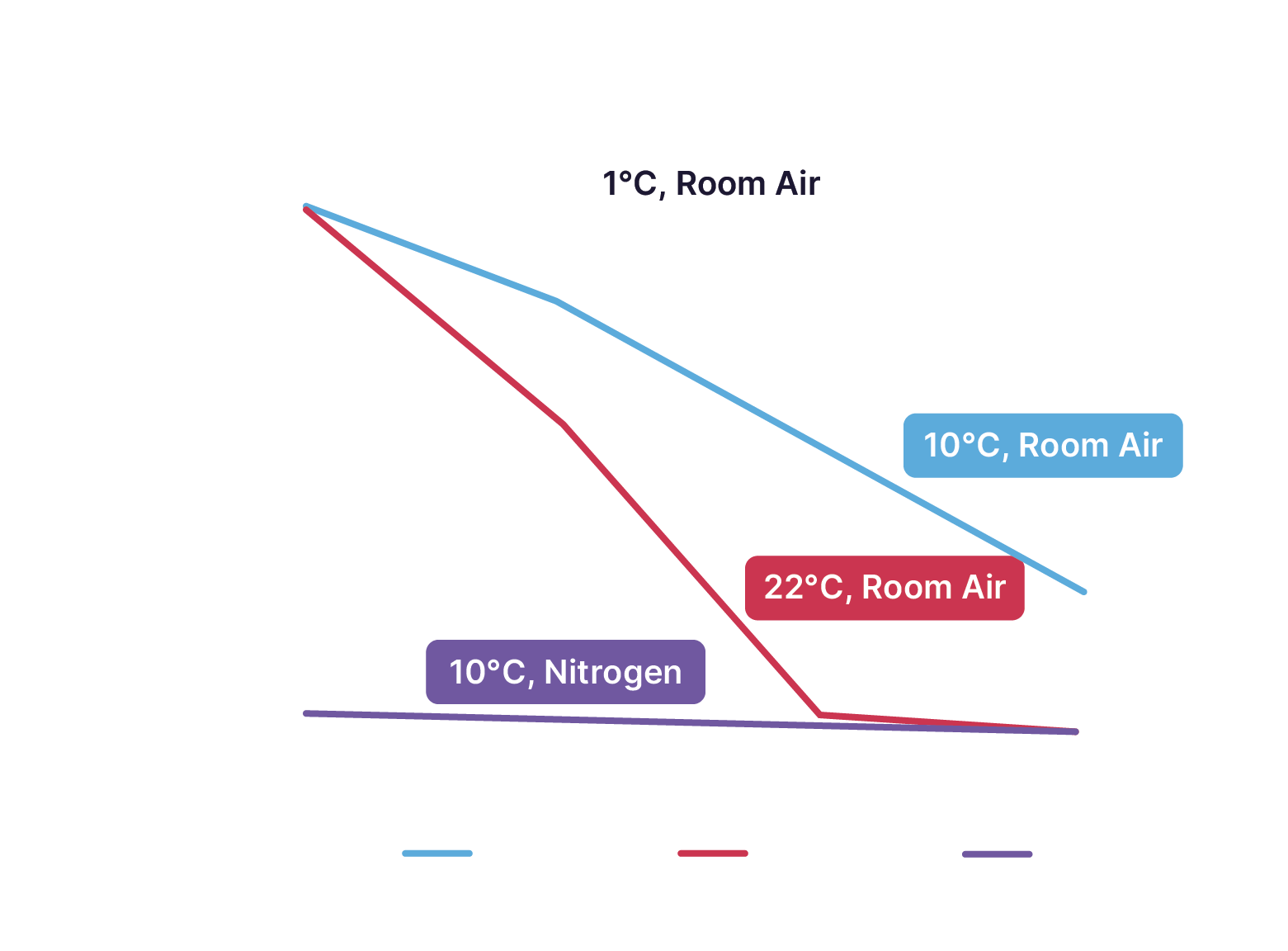
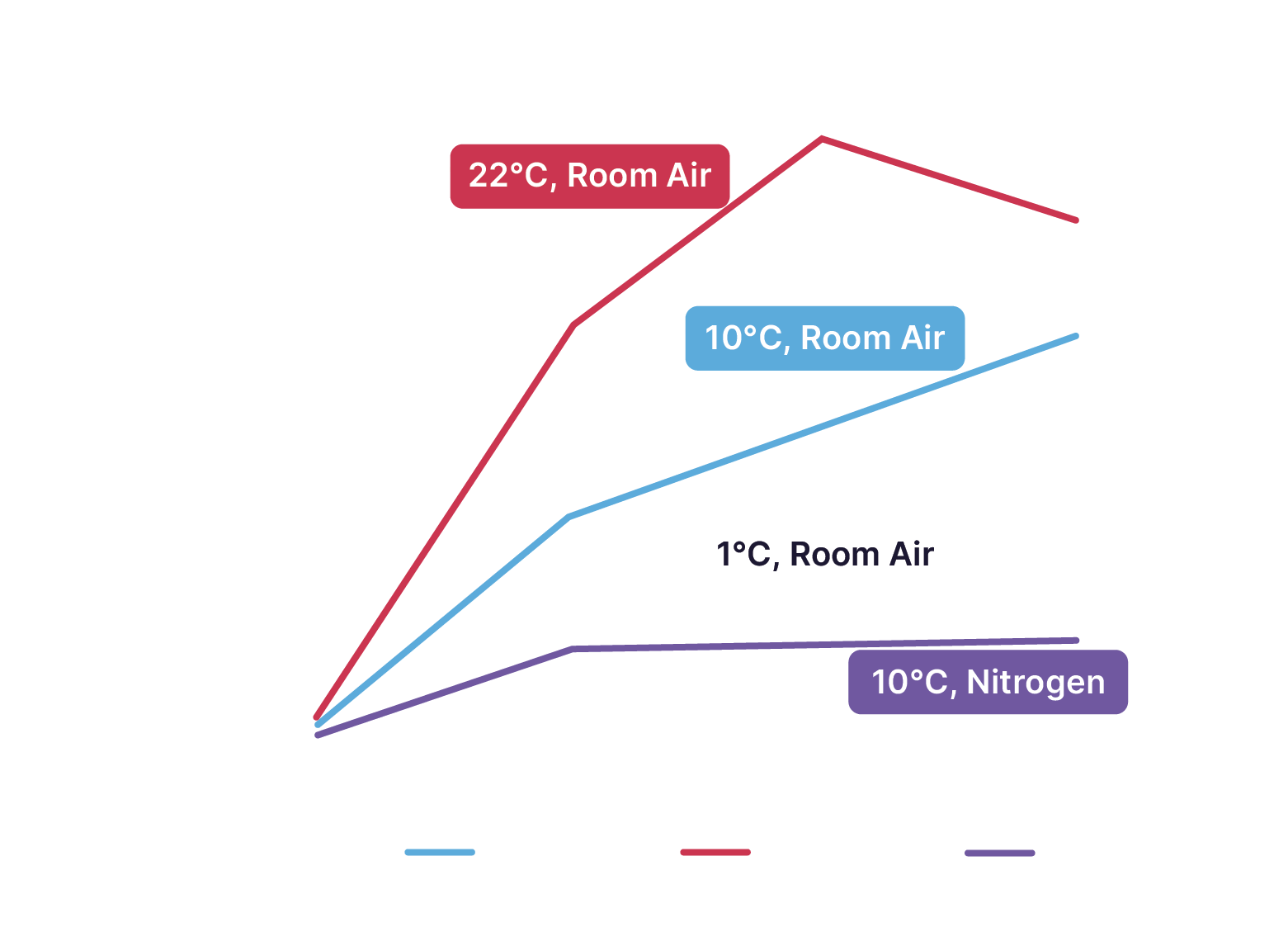
Taken together, these data argue that lungs maintain metabolic activity even during hypothermic preservation, likely resulting in declining airway pressures. Without active airway pressure control, there is a higher risk of delivering under-inflated grafts. When this idea is compounded with imprecise packing procedures, an initially under-inflated lung is at risk of dropping pressure even further during preservation due to the lungs’ aerobic state.
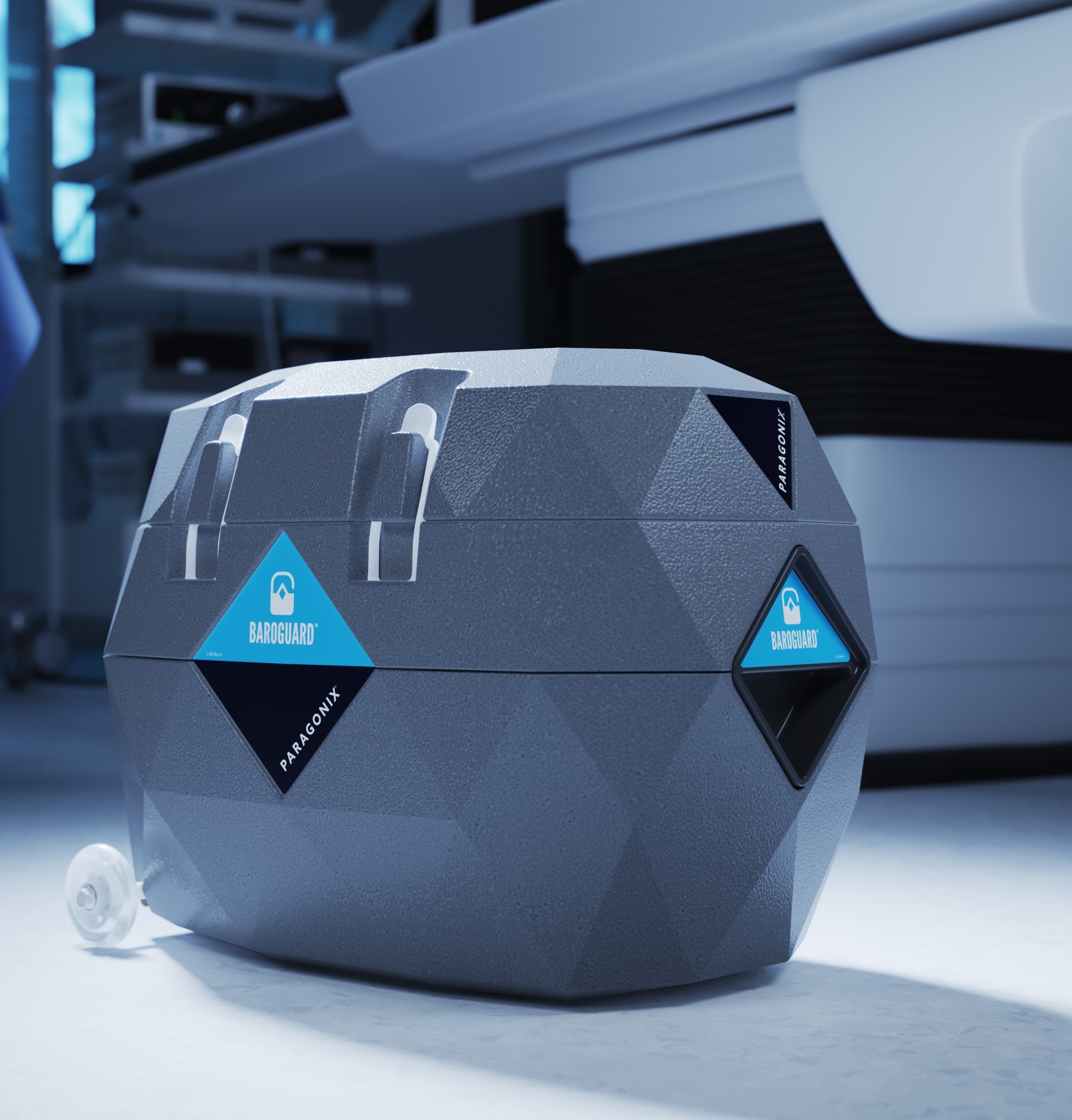
THE PARAGONIX BAROGUARD PRESERVATION SYSTEM
ENGINEERED TO EMPOWER.
When discussing optimal preservation conditions for donor lungs, it is essential that pressure control is included in the conversation. The literature demonstrates that donor lungs continue to undergo metabolic activity during preservation, even under hypothermic conditions.
To support these ongoing metabolic demands, BAROguard is designed to maintain airway pressure by drawing in fresh room air as needed to help preserve inflation throughout transport. By adding a mechanically controlled feature, BAROguard is able to achieve consistent and controlled airway pressures as well as maintain higher levels of oxygen than in a statically stored lung.
As the field of preservation continues to advance, future research should focus on how best to sustain the continued metabolic needs of donor lungs during hypothermic storage, especially if considering warmer preservation temperatures.
BY THE NUMBERS
RAPID ADOPTION OF PARAGONIX LUNG PRESERVATION
GUARDIAN-Lung Enrollments
Global Transplant Centers
Get In Touch
View References List
- De Perrot et al., Strategies to optimize the use of currently available lung donors. JHLT 2004.
- Copeland et al. Donor heart and lung procurement: A consensus statement. JHLT 2020.\
- Kukreja et al., The 2024 American Association for Thoracic Surgery expert consensus document: Current standards in donor lung procurement and preservation. JHLT 2025.
- Cantu et al., Evaluation and Management of the Potential Lung Donor. Clin Chest Med 2018.
- Krishnan et al., Procurement of lungs from brain-dead donors. Indian J Thorac Cardiovasc Surg 2021.
- Langer, AATS MCS Industry Symposium 2025, Data on file. Delivering Textbook Outcomes in Lung Transplantation. September 5, 2025.
- Greenwald et al., Cabin pressurization characteristics of USAF and commercial transport aircraft. Aeromed Rev., 1967.
- Falcon 10X Aircraft. (6 May, 2021). https://www.dassaultfalcon.com/news/falcon-10x-2/#:~:text=Healthy%20cabin%20features:%20Cabin%20pressurization,for%20an%20even%20temperature%20throughout.
- Private Jet Charter. Gulfstream G650. https://privatejetcharter.com/aircraft/gulfstream-g650/#:~:text=Welcome%20to%20Private%20Jet%20Charter,an%20abundance%20of%20natural%20light.
- Kelly et al., Directly measured cabin pressure conditions during Boeing 747-400 commercial aircraft flights. Respirology 2007.
- Federal Aviation Administration. (2004). Pressurized compartment loads: General Structures Harmonization Working Group (Report No. ARAC TAEIG L-350-04-112). U.S. Department of Transportation. https://www.faa.gov/media/31686
- Geertsema C, et al. Effect of commercial airline travel on oxygen saturation in athletes. Br J Sports Med. 2008 Nov;42(11):877-81.