
LUNG TRANSPLANTATION
PRESSURE POINTS
separating evidence from assumption
ACHIEVING A CONSENSUS - OR CONVENIENCE?

THE SINGLE ACCEPTED CONSENSUS...ICE IS TOO COLD.
The 2024 AATS Expert Consensus Document on Current Standards in Donor Lung Procurement and Preservation states that studies investigating static cold storage between 4°C and 10°C support the use of these warmer temperatures for safe storage of donor lungs.1 Co RIIa, LoE B-NR, 100% consensus.
THE (IN)ACCURACIES OF REPORTING
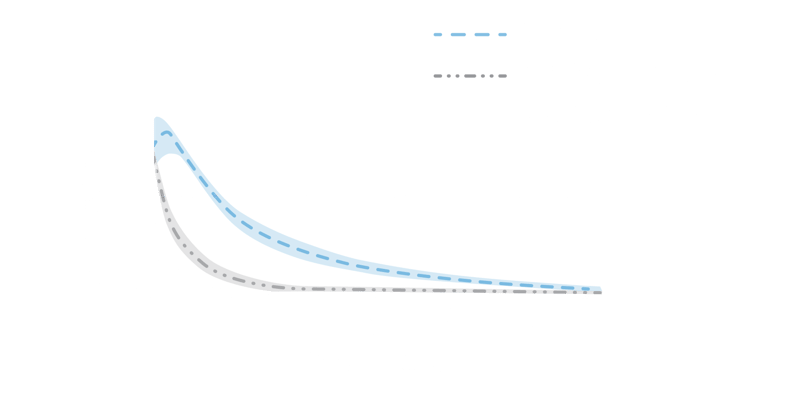
Temperature Dynamics of Porcine and Human Lungs During Static Ice Storage: Ice Is Not 4 °C
In this study of traditional static ice storage, the actual tissue temperature of the lungs was <2°C and the temperature of the Perfadex was 0°C within 3 hours of ice storage, demonstrating that the underlying assumption of ice storage at 4°C is not feasible.
AND YET...
EXPOSING THE BLIND SPOT
The Hidden Flaw in Preservation Temperature Data Reporting15-19
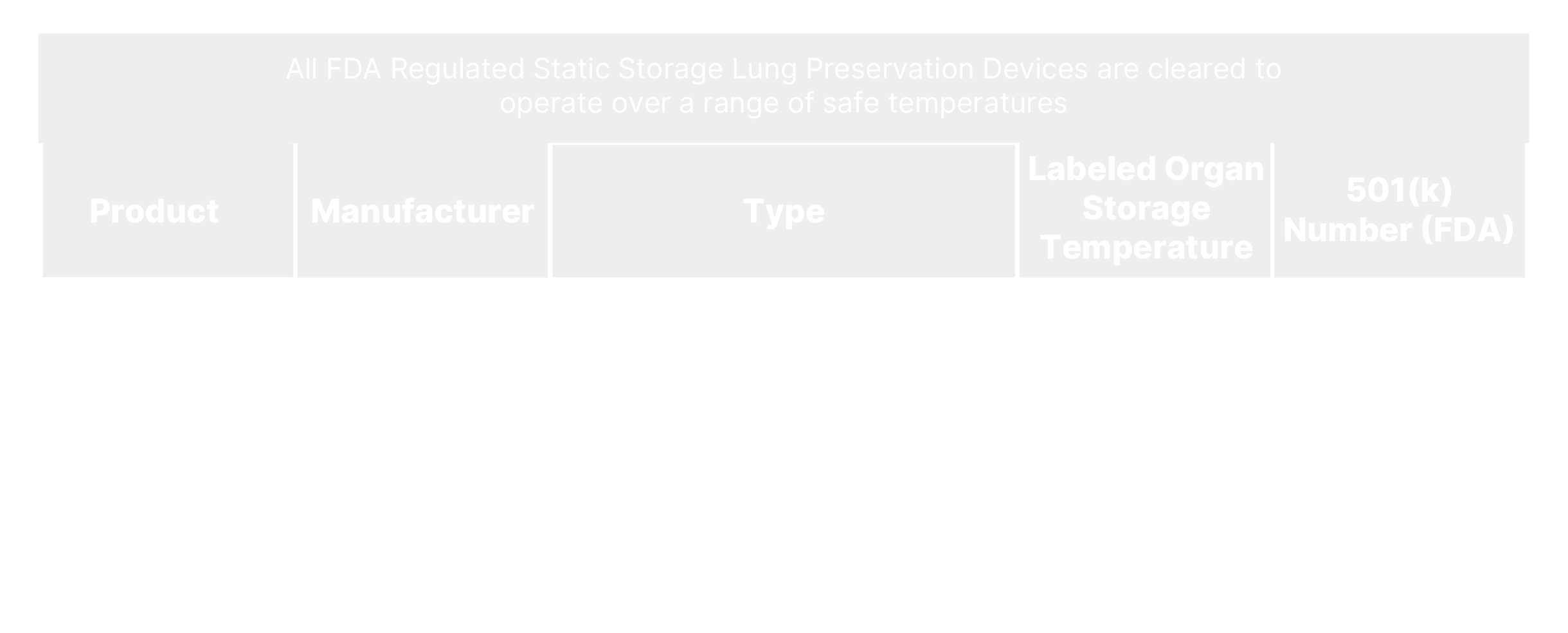
- FDA-Regulated Static Preservation Devices
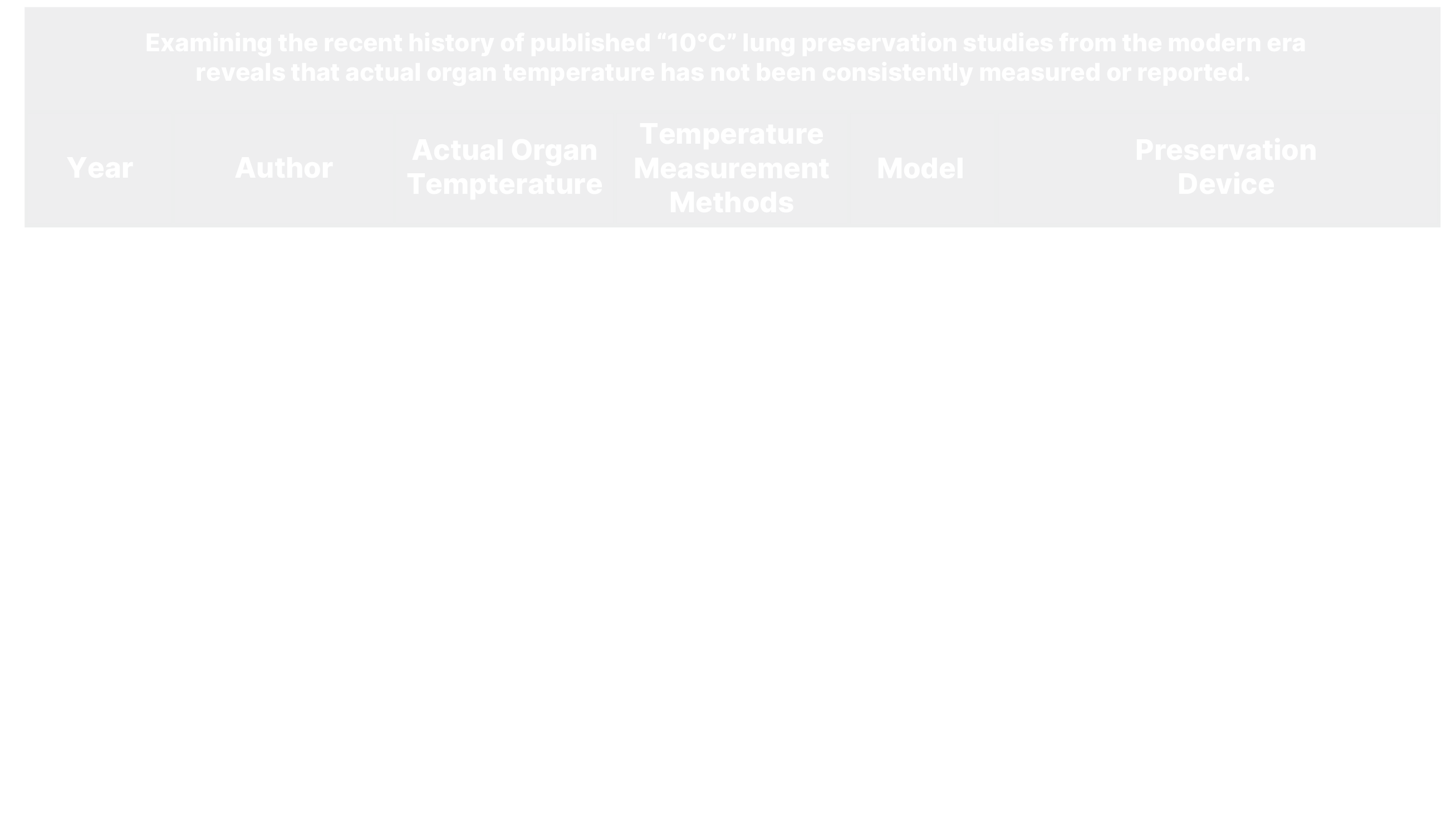
- Temperature Reporting in Recent Clinical Publications
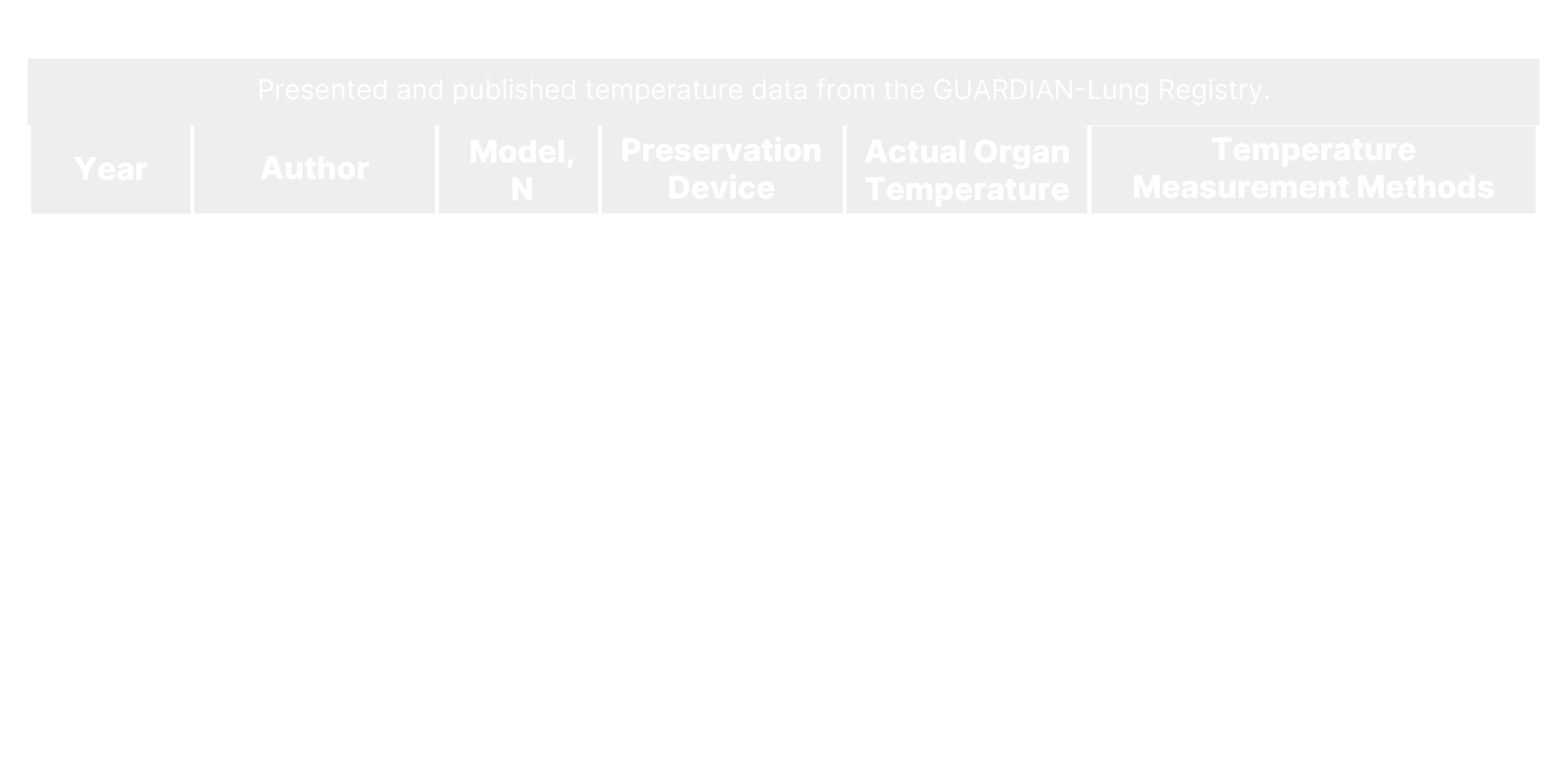
- Temperature Reporting in GUARDIAN-Lung Reports
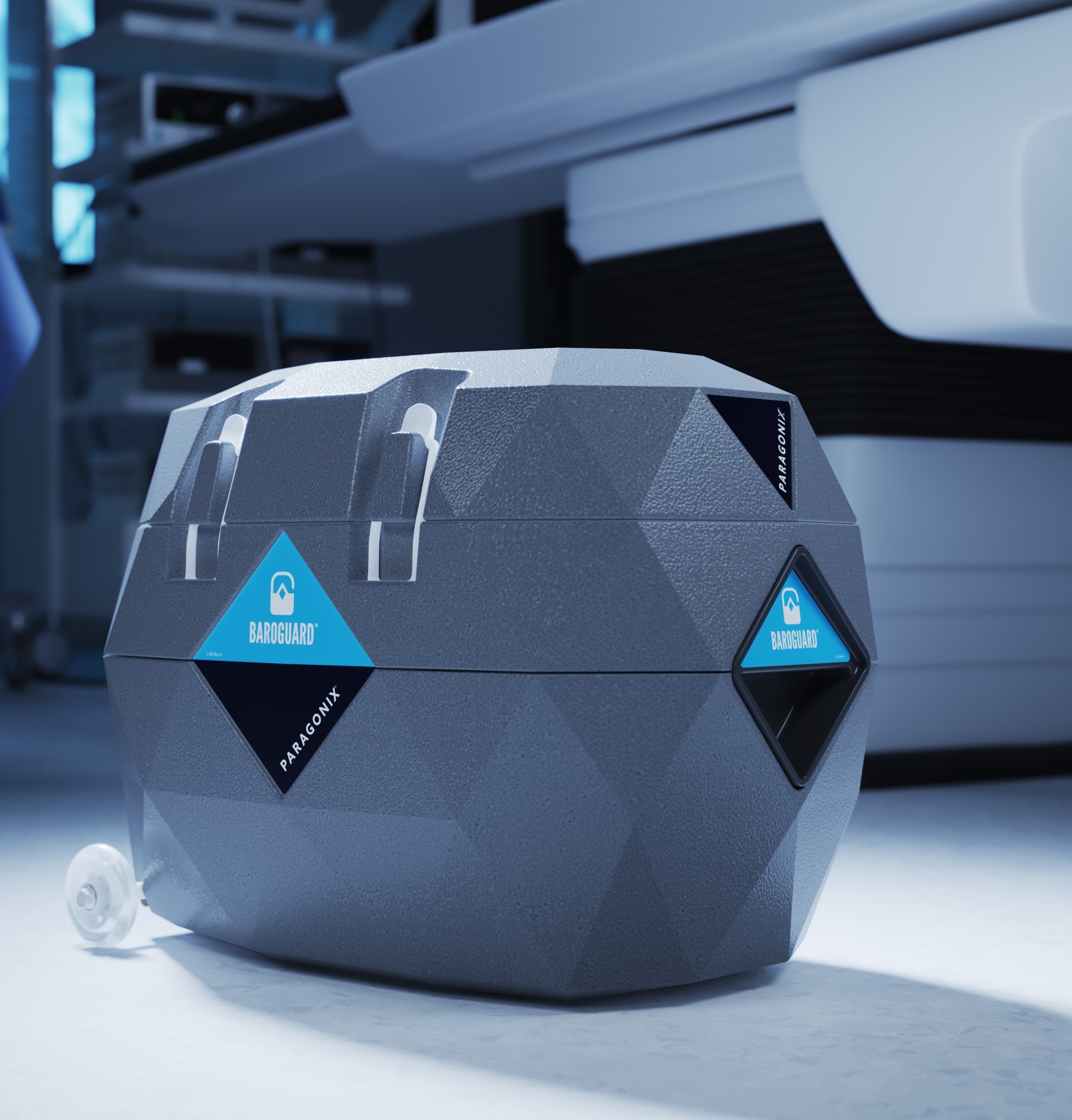
A PARAGONIX CLINICAL REGISTRY
GUARDIAN-LUNG
The GUARDIAN-Lung Registry is one of the first means to study and compare traditional ice storage against FDA-regulated static controlled moderate hypothermic lung preservation, including both the LUNGguard and BAROguard preservation systems.
Several reports of the GUARDIAN-Lung data have been presented, each including data collected from the embedded temperature probe that continuously measures the temperature of the preservation solution surrounding the lungs.2-7
To date, the only transparently reported evidence comes from the GUARDIAN-Lung Registry, which has demonstrated that lung preservation at a range of 4–8 °C is safe and effective.
ACCURACY OF TEMPERATURE MEASUREMENTS
AMBIGUOUS CONCLUSIONS?
[Static lung storage at 10°C maintains mitochondrial health and preserves donor organ function]
“...preliminary studies published more than 30 years ago have suggested that 10°C is the optimal lung storage temperature.”
- ALI ET AL, 2021. Sci Transl Med.
DEFINING INPUT VS OUTPUT
IN TEMPERATURE-BASED PRESERVATION STUDIES
THE REALITY?
DEBUNKING THE MYTH OF THE MAGIC NUMBER
View References List
-
Kukreja et al., The 2024 American Association for Thoracic Surgery expert consensus document: Current standards in donor lung procurement and preservation. JTCVS 2024.
-
An-Lies Provoost, et al. Lung transplantation following controlled hypothermic storage with a portable lung preservation device: first multicenter European experience, Frontiers in Cardiovascular Medicine, (2024).
-
Laurens J Ceulemans, et al. Extended Ischemic Time (> 15 Hours) Using Controlled Hypothermic Storage in Lung Transplantation: A Multicenter Experience Running head: Extended Ischemic Time in Lung Transplantation, Journal of Heart and Lung Transplantation, (2024).
-
Langer et al., ISHLT Presentation 2025, Data on file. Real-World Outcomes Using Controlled Moderate Hypothermia at 4-8°C for Lung Transplant: An Update from the GUARDIAN-Lung Registry. April 29, 2025, 5:18 PM - 5:22 PM, Ballroom B.
-
Hartwig et al, ISHLT Presentation 2025, Data on file. Controlled Moderate Hypothermic Storage at 4-8°C for the Preservation of Donor Lungs from Donations after Circulatory Death. April 29, 2025, 4:30 PM - 5:30 PM, Poster Hall.
-
Ceulemans et al., ISHLT Presentation 2025, Data on file. Lung Preservation at Controlled 4-8°C for Extended Criteria Donors Improves Outcomes After Transplantation. April 27, 2025, 3:00 PM - 3:08 PM - Ballroom B.
-
Bush et al., ISHLT Presentation 2025, Data on file. Constant Airway Pressure Management System Leads to Improved Donor Lung Outcomes: Analysis of Ischemic Times >8 Hours. April 27, 2025, 4:42 PM - 4:50 PM, Rooms 302-304-306.
-
Traferox Technologies (2025). XPort: Instructions for Use. Retreieved from https://traferox.com/wp-content/uploads/2025/07/CAR-910-0003-UM-Rev-1-XPort-Lung-Preservation-Solution-IFU.pdf.
-
https://www.clinicaltrials.gov/study/NCT05898776.
-
Ali A, et al. Static lung storage at 10°C maintains mitochondrial health and preserves donor organ function. Sci Transl Med. 2021 Sep 15;13(611):eabf7601.
-
L. S. Wang, et al. The effect of ischemic time and temperature on lung preservation in a simple ex vivo rabbit model used for functional assessment. J. Thorac. Cardiovasc. Surg. 98, 333–342 (1989).
-
H. Date, et al. In a canine model, lung preservation at 10 degrees C is superior to that at 4 degrees C. A comparison of two preservation temperatures on lung function and on adenosine triphosphate level measured by phosphorus 31-nuclear magnetic resonance. J. Thorac. Cardiovasc. Surg. 103, 773–780 (1992).
-
K. Nakamotoet al. A study on optimal temperature for isolated lung preservation. Ann. Thorac. Surg. 53, 101–108 (1992).
-
Cenik I, et al. Temperature Dynamics of Porcine and Human Lungs During Static Ice Storage: Ice Is Not 4 °C. J Clin Med. 2025 Mar 20;14(6):2127.
-
Hoetzenecker K, et al. Prolonged Preservation of up to 24 Hours at 10 °C Does Not Impact Outcomes after Lung Transplantation. Ann Surg. 2025 Apr 1;281(4):664-670.
-
Gil Barturen M, et al. Donor Lung Preservation at 10°C: Clinical and Logistical Impact. Arch Bronconeumol. 2024 Jun;60(6):336-343.
-
Ali A, et al. Extension of Cold Static Donor Lung Preservation at 10°C. NEJM Evid. 2023 Jun;2(6):EVIDoa2300008.
-
Abdelnour-Berchtold E, et al. Evaluation of 10°C as the optimal storage temperature for aspiration-injured donor lungs in a large animal transplant model. J Heart Lung Transplant. 2022 Dec;41(12):1679-1688.
-
Ali A, et al. Static lung storage at 10°C maintains mitochondrial health and preserves donor organ function. Sci Transl Med. 2021 Sep 15;13(611):eabf7601.
X°PORT is a trademark of Traferox Technologies Inc.