LUNG TRANSPLANTATION
NO MAGIC NUMBER
DOES A MAGIC NUMBER EXIST?
THE CURRENT STATE OF AFFAIRS
WHAT'S REGULATED?
BAROguard Lung Preservation System
Designed to store, preserve, and transport human lungs donated for transplantation at 4°C-8°C with additional automated airway pressure control at 12-15 cm H20.
LUNGGUARD SYSTEM
PREDICATE DEVICE
The Paragonix LUNGguard System was the first passive hypothermic system indicated to store, preserve, and transport donor lungs at a range of 4°C-8°C.
x°port LUNG PRESERVATION SYSTEM
Designed to store, preserve, and transport human lungs donated for transplantation at 4°C-10°C.
X°PORT is a trademark of Traferox Technologies Inc.
In other words, the FDA has cleared static preservation devices to hold temperature ranges: specifically 4–8°C or 4–10°C.
HOW DO PASSIVE SYSTEMS COOL?
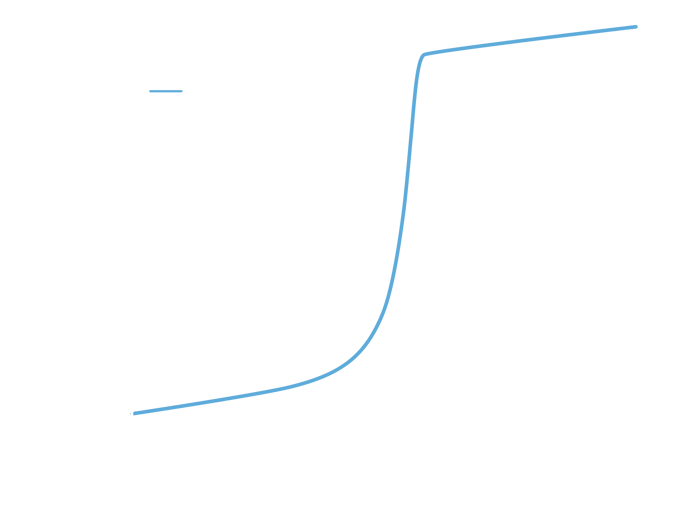
Real PCMs experience a gradual melting or solidifying of the material across several degrees, in comparison to an idealized, theoretical PCM, which would undergo an isothermal phase transition at a single temperature and does not exist in practice.
This temperature range can be further understood in terms of finite heat transfer and spatial temperature gradients within the PCM. This means that different regions of the material absorb or release heat at different rates, causing segments of the material to transition at slightly different temperatures causing a spatial temperature gradient.9,10
THE ENGINEERING PERSPECTIVE:
Variation in lung size, in-situ flush temperature, technique, and time between final breath and the start of preservation are significant contributors to the actual preservation temperature of a donor lung. These variables, combined with a consistent energy capacity in the PCM, inevitably result in variable temperature.
Reporting a single characteristic temperature is insufficient, and it is recommended that all PCMs in passive thermal systems be described with temperature ranges for the greatest level of accuracy and transparency.
DID YOU KNOW?
THE USE OF UNREGULATED STORAGE DEVICES
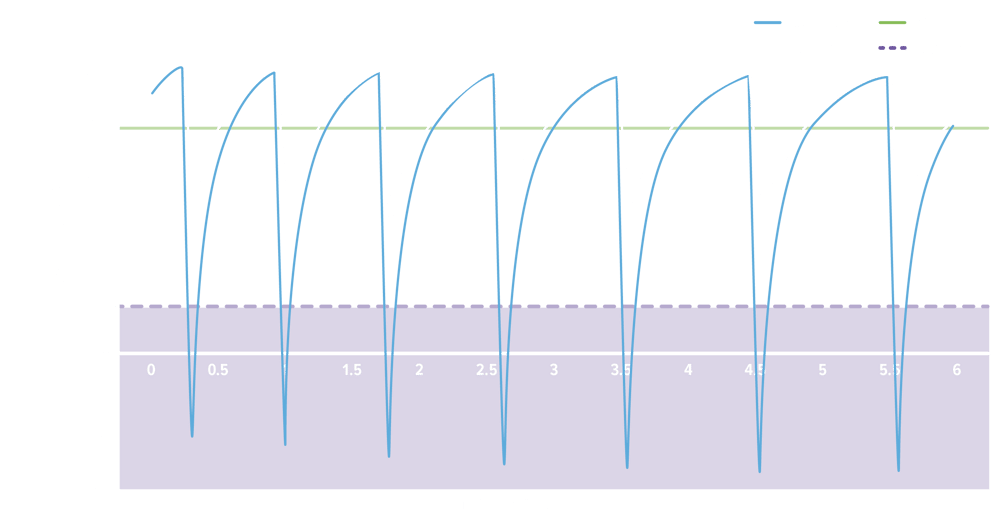
Thermoelectric systems have not received FDA clearance or approval for organ preservation and transport.4-7 Their thermostat control mechanisms have not been validated to meet the rigorous standards applied to FDA cleared or approved medical devices and may subject the contents to cyclic variations in temperature. They have not been recommended by any professional societies for donor organ storage.
SO WHAT'S THE OPTIMAL PRESERVATION CONDITION?
Control the Conditions. Not Just the Temperature.
View References List
- LUNGguard 510k Premarket Notification. https://www.accessdata.fda.gov/CDRH510K/K192869.pdf.
- BAROguard 510k Premarket Notification. https://www.accessdata.fda.gov/cdrh_docs/pdf22/K223874.pdf.
- X°Port 510k Premarket Notification. https://www.accessdata.fda.gov/cdrh_docs/pdf24/K243870.pdf.
- MYTEMP 65HC: https://www.gohcl.com/assets/d9/b6/d9b6b613-100d-4f53-8576-b90aa36e3108/21088_Instructions.pdf
- Ryobi https://556aa8d9de68ea9c4f29-0a8acad11a4df5016d26cc39a7429843.ssl.cf1.rackcdn.com/2/Pi1824BQT_015_trilingual_03.pdf
- Lion Cooler: https://cdn.shopify.com/s/files/1/0095/7431/8146/files/PX30A_PX40A_PX50A_User_Manual.pdf?v=1689665989
- Dometic: https://www.dometic.com/externalassets/07-0703-070328-070328002_97000050754_123574.pdf?ref=-1684432367.
- Fatahi et al., Thermal Characterization of Phase Change Materials by Differential Scanning Calorimetry: A Review. Appl. Sci. 2022, 12(23), 12019; https://doi.org/10.3390/app122312019.
- Ye et al., Improved Performance of Latent Heat Energy Storage Systems in Response to Utilization of High Thermal Conductivity Fins. Energies 2023, 16(3), 1277; https://doi.org/10.3390/en16031277.
- Günther et al., Measurement of the enthalpy of PCM. Conference: 11th International Conference on Thermal Energy Storage At: Stockholm, Sweden. 2009.